|
| |
 |
Historical Information |
|
The Lincoln Memorial
|
The original Lincoln memorial stands forgotten in D.C.’s Judiciary Square |
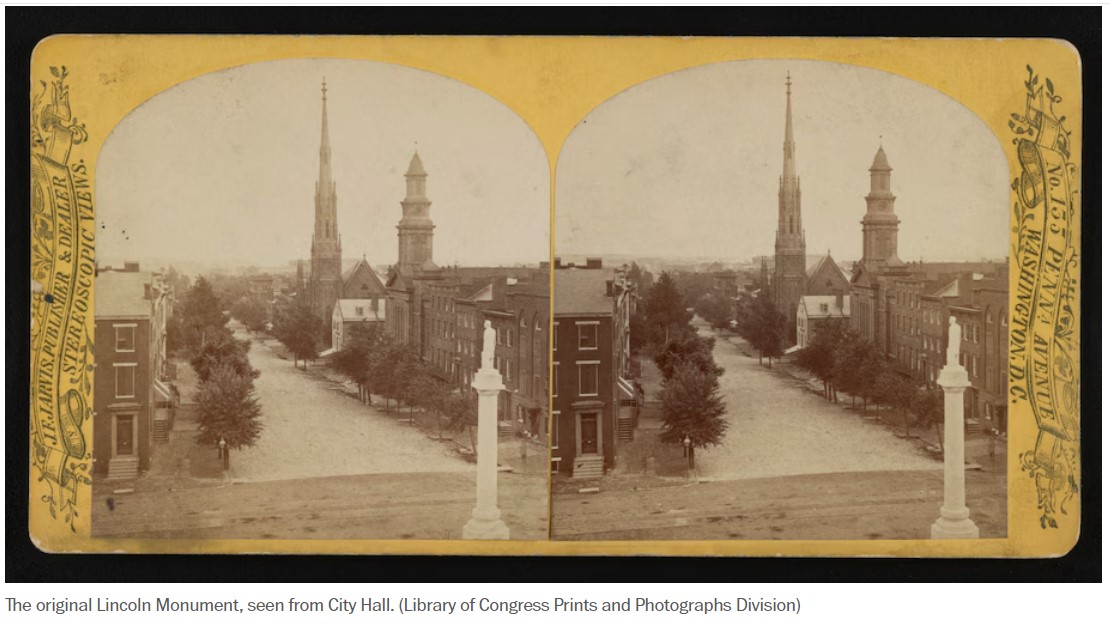 |
Just nine days after Lincoln’s death on April 15, 1865, the Washington city council introduced a resolution to create a committee to “devise measures for the erection of a monument in the City of Washington to the memory of the late President Lincoln.” The resolution was approved, and the Lincoln National Monument Association (NLMA) was formed to carry out the task. |
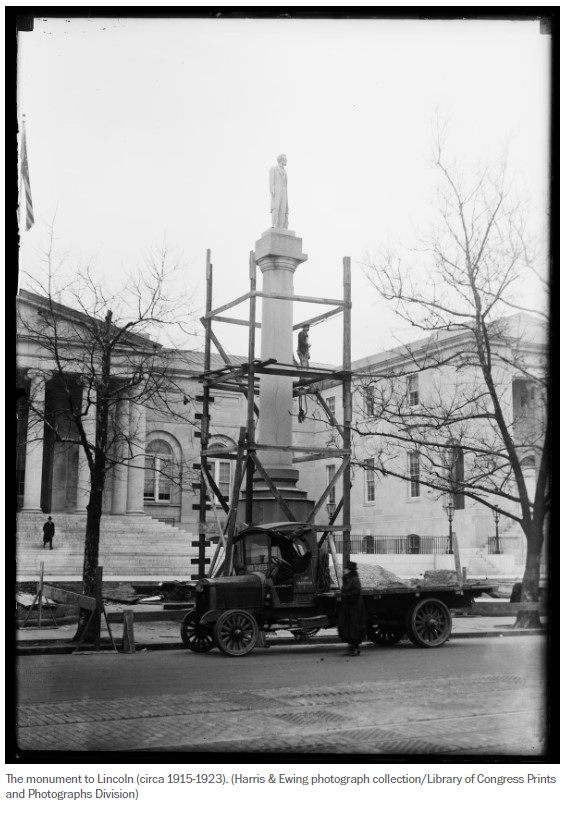
That monument, erected in 1868, is the oldest surviving public statue of Abraham Lincoln in the United States. Many consider it the best likeness of the Great Emancipator ever made in marble. The statue’s history is a story of survival: removed twice, renovated twice, damaged multiple times, abandoned for two years and replaced after a president’s intervention — yet still it stands, the tribute of the residents of the capital city to its fallen president. |
 |
The committee selected a proposal by D.C. sculptor and marble worker Lot Flannery. Flannery was actually in the audience at Ford’s Theatre the night Lincoln was shot. (He was also called to be a juror in the trial of Lincoln assassination conspirator John H. Surratt in June 1867, but he told the court he had already formed an opinion of the case, so he was dismissed.) |
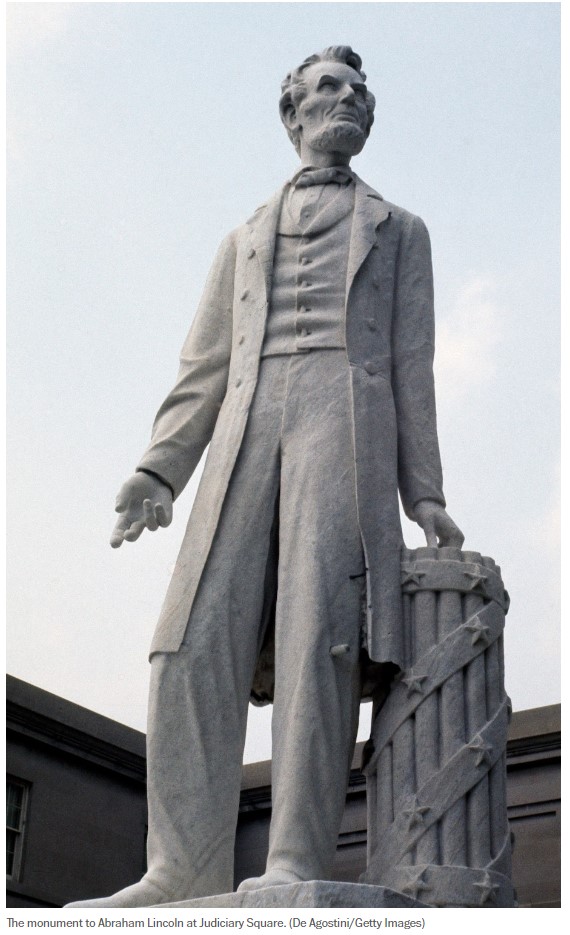
Flannery’s design for the Lincoln Monument was for a 36-foot-high memorial made of white Italian marble, with an eight-foot statue of the president on a four-foot pedestal atop an 18-foot column upon a six-foot octagonal base, all surrounded by an iron railing. The statue represented Lincoln standing, as though giving a speech, with his right arm slightly extended and his index finger pointing, while the left hand rests on a fasces (a bundle of sticks bound with a ribbon of stars, a Roman symbol of leadership). |
 |
There’s a Typo on It and 13 Other Memorable Facts About the Lincoln Memorial |
|
|
Visit us on Facebook  |
|
| This web site built and maintained by Pete Baer |
|